

Moving to Canada comes with a lot of paperwork. There’s setting up the bank account, finding a place to live, a job if you don’t have one already, sorting out your visas, your health card or insurance, driver’s licence, getting a phone with the added expensive phone plan and finally, a credit card. That’s a lot of numbers.
But there’s another number that newcomers quickly learn to care about because it influences so much in our financial lives: the credit score. And when you arrive in Canada, you’re starting from zero, no matter how good your credit score was or how well you organized your finances in your home country.
But first, just to cover off the basics: what is a credit score and why is it so important? It’s a three-digit number between 300 and 900 that lenders use to decide the likelihood of you repaying a loan or making payments on time. Lenders will check your credit score, that ‘hard hit’ we hear about to determine if you’ll qualify for a loan, a credit card and the interest rate you’ll get. The higher your number, the more likely you’ll get a better interest rate.
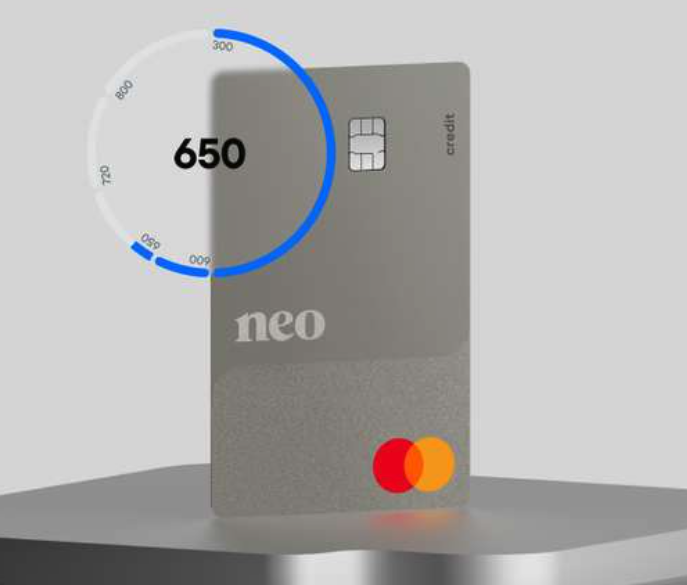
Build your credit history with a Neo Secured Mastercard! Plus, sign up now via the button below and get a $60 welcome bonus.
*Limited-time offer. Only valid for new Neo customers who open their first eligible Neo credit product and make a purchase within 90 days.
Getting that number to above 700 can feel like trying to build a financial reputation from scratch. So I asked three Canadian newcomers with credit scores above 700 to show me exactly how they did it.
I spoke with Vickram Agarwal, who is an award-winning Canadian entrepreneur, marketing executive, and personal finance columnist. He moved to Canada in 2019. He was born in India, and has lived in Dubai, the United Arab Emirates and the UK.
“I only learned what a credit score was after landing in Canada, specifically in my first week, when we went to a dealership to lease a car and were told it was out of the question this early in my immigrant journey,” he said. The UAE hadn’t introduced credit scores and reports while he lived there.
So he did what most newcomers do when they come to Canada. He opened a bank account and applied for credit cards. “[I] got rejected for several, even though I paid my bills on time. None of that moved the needle much, because my starting point was so low. I kept doing all the other things newcomers are always told to do.” It took him five years to get his credit score to where he wanted it to be.
“I learned that credit scores are a real measure of financial standing in North America, a completely different reality from where I was raised, and that it needed to become a permanent part of how I think about my finances,” he said. “Even once I was past the newcomer stage, even without any active plans to borrow, I still had to keep paying attention to that number and doing the things that keep it where I want it. At this point I treat my credit score the way I treat personal hygiene: necessary, important, and something I don't get a day off from.”
For Diego Suarez, who came from Mexico in 2023, credit scores were common back home. He told me that he built his Canadian credit score with a credit card. “I opened a credit card as part of Scotiabank's newcomers program with a limit of $1,500. After initially struggling to get approved for additional cards, I opted for a Neo secured card while I waited for my credit history to mature.”
It took him two years to get his credit score above 700. Here’s what he told me about his journey, “Consistency is key. I also learned that it is beneficial to open different credit accounts to build history, even if I don’t use them frequently. I try to manage them responsibly while maximizing the specific perks and benefits offered by each card.”
Edel Buggy, who came to Canada from Ireland in 2019, told me she got her first credit card in Canada. “My need for a credit score was to get an apartment. I ended up getting an apartment through a company which would accept multiple months of rent payments and proof of income. It was through a management company,” she said.
“I actually got it through my friend who had a job as I did not have a job at that time. Once I got a place to live I wasn't concerned about my score as much. However I did start building it so it would be there if I needed it. I rarely check it but always make sure to pay off credit cards etc on time so I have it if I need it.”
While she’s not sure when she got her credit score to where she wanted it, she has learned a few things that keep her score high. One is to be cautious of applying for unnecessary cards to avoid that hard credit check that can make your credit score drop a few points.
“For example, if you want to apply for a store credit card, the store has to check your credit score. That can negatively impact your credit score,” she said. “I learnt that debt can help your credit score. For example, having credit cards, using them and then paying them off helps your score. I've also heard having loans, a mortgage etc can help your credit score as long as you pay off the payments on time.”


