

SPONSORED - People cross borders, but credit scores don’t. New Canadians are required to come with enough money to support themselves upon arrival. But then they get here and discover the bare necessities of life require credit histories they don’t have.
I talked to three newcomers who arrived with some mix of savings, steady work histories, good credit in their home countries, or years of responsible money habits. But Canadian creditors didn’t care, and some even treated them like financial pariahs.
Here’s how Neo Financial helped them build credit and get off the struggle bus.
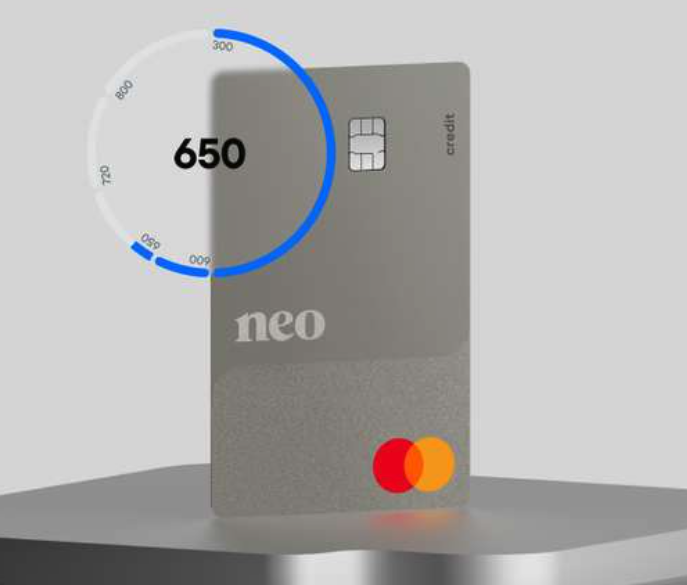
Build your credit history with a Neo Secured Mastercard! Plus, sign up now via the button below and get a $60 welcome bonus.
*Limited-time offer. Only valid for new Neo customers who open their first eligible Neo credit product and make a purchase within 90 days.
Diego Had Good Credit in Mexico. In Canada, He Had to Prove Himself All Over Again
“I knew it was going to be hard, but not as hard when I got here.” When Diego moved from Mexico to Calgary, Alberta, in September 2023, he certainly wasn’t new to financial adulting. Back home, he had good credit and multiple credit cards that he paid in full every month.
But in Canada, none of that mattered because he couldn’t bring his Mexican credit history with him. “I had to start over from scratch,” he told me.
Diego knew credit would be important in Canada. He had attended pre-arrival sessions and understood that he should open a bank account and credit card as soon as possible. But he had no idea how hard it would be to secure something as essential as housing.
One Calgary rental was $2,000 a month, but the landlord wanted proof he could cover at least one full year of rent. “That’s $24,000!” Diego exclaimed. “Nobody has that.”
His application was rejected.
Diego opened his first Canadian account with Scotiabank because he was already familiar with them in Mexico. And he knew most of the big banks offer some sort of newcomer’s package. But he quickly became unhappy with Scotia because it didn’t reward his good credit behaviour. His credit card limit stayed around $2,500, even though he was using it responsibly.
Then he opened a Neo Financial secured credit card. “I had previous experience with similar fintechs back in Mexico,” Diego said, “So I decided to give it a try. The biggest thing was cashback that I get right away.” Neo pays out cashback rewards almost instantly, instead of forcing him to wait until the end of the month or the year, like other cards do.
Within roughly six months, Neo offered him an unsecured card with a much higher limit. “I knew that they were keeping better track of my good use of my credit card,” he said. That gave him more breathing room and helped him show lenders he could manage more available credit responsibly.
He eventually opened a Neo chequing account, too.
Today, Diego’s credit score is around 700. He has been approved for several other credit cards, a line of credit, and a mortgage that he used to purchase a home last year.
He says even though Scotiabank was his entry point into the Canadian banking system, it was Neo that helped him build credit and a life.
Sam Couldn’t Even Finance a Phone When He Arrived in Canada. Six Months Later, He Bought a Car
“We have a relatively well-developed banking system in Nigeria, but we don’t have a credit system,” explained Oluwatosin, who goes by Sam. “Nobody has a credit history from there.”
When Sam landed in Winnipeg, Manitoba, with his wife and two young children in 2021, he had $2,000 to his name. His first month’s rent was $1,500, leaving just $500 for everything else.
He was lucky enough to find an empathetic landlord who accepted bank statements from Nigeria. But the credit barrier showed up almost immediately when he tried to get a phone. He was rejected because he had no Canadian credit history.
That was the first moment he realized, “Oh, this is serious. This is really, really serious.”
The second came after he landed an accounting job. His total commute was three hours round trip by bus, and in a Winnipeg winter, he knew that wasn’t sustainable. But when he tried to finance a car, he was rejected again.
“That was what opened my eyes that I really need to do this,” he said. “I really need to build my credit.”
RBC was Sam’s first bank in Canada, but when he applied for a credit card, they told him to wait. Then he found Neo Financial by accident at Kildonan Place Mall in Winnipeg. A Neo representative explained he could start with a secured credit card that reports to both TransUnion and Equifax.
Sam secured the card with $200, used it for groceries, and paid it off before the due date.
RBC eventually offered him a $2,000 credit card after payroll deposits started hitting his account. But Neo let him start building credit right away, without having to prove himself first. Shortly after opening the secured card, Sam was approved for the unsecured Neo Mastercard with an $8,000 limit.
Six months later, he went back to the same car dealership and was approved.
Today, Sam’s credit score is 751. At its highest, it reached 801. He’s been able to finance cars and qualify for a mortgage. He moved into a newly built home with his family in 2023.
He also has several Neo products, including the secured card he started with, the United rewards card, and a World Elite card he uses for airport lounge access. Sam and his wife are looking at testing the Neo joint chequing account, and if all goes well, they’ll move most of their banking over.
“Neo really helped me understand how to build credit,” he said. “It’s like giving somebody a chance at a new life.”
Roselle Had a Home, a Car, and Good Credit in the Philippines. But She Couldn’t Get an Apartment in Canada.
“The great credit score we had in the Philippines was not recognized in Canada,” Roselle says. “So we really had to start from scratch.” When she moved from the Philippines to Dawson Creek, B.C., in 2020, she did not need access to credit right away.
She came as an international student at Northern Lights College. Her family lived in student housing, which gave them stability from the outset. But that delayed the reality of how important credit is in Canada.
Her first credit card came unexpectedly. Her husband was denied when applying for a Triangle Mastercard at a store, but Roselle was approved for $500. Initially, her family advised her to use cash. But coworkers told her that if she wanted to build credit, she needed to use it. So she used the card for small daily purchases and paid it off quickly.
After graduation, it was time to move out of the dorms and into her own apartment. Roselle’s rental applications were denied due to insufficient credit history. “That was my ‘aha’ moment,” she says. “If you don’t build enough credit, you won't be able to get into a good home.”
RBC eventually offered her a credit card after about a year, while her husband was denied twice by Scotiabank, despite having accounts with healthy balances.
She later discovered Neo Financial through a social media ad. The cashback rewards felt more straightforward and relevant to her compared to other programs. She started with the basic Neo Mastercard and eventually upgraded to the Neo World Mastercard, a no-fee traditional credit card offering up to 2% cashback.
Neo quickly became her primary card, especially as her limit grew from around $2,000 to $7,700. That increase helped her manage credit utilization more effectively, which improved her credit score further.
“With a higher credit limit, I was able to show that even if I have a higher limit, I was very responsible in using it and paying it,” she says.
By 2024, Roselle built her credit score to around 760 and was approved for a car loan. She’s now working on getting approved for a mortgage.
Looking back, she believes newcomers should be taught financial literacy early on. Most agencies don’t explain how to build credit or get financially established. Newcomers are left to navigate a foreign financial system by themselves.
Roselle says the focus is on whether immigrants bring enough cash to support themselves. But cash only gets you so far. Credit is what helps you access the things you actually need to thrive here.
Neo helped recover some of that lost time by giving her another way to build a Canadian credit profile.
Build your credit history with a Neo Secured Mastercard! Plus, sign up now via the button below and get a $60 welcome bonus.
*Limited-time offer. Only valid for new Neo customers who open their first eligible Neo credit product and make a purchase within 90 days.
Neo Gives Immigrants a Low-Barrier Way to Build Credit in Canada
Cash can pay for groceries, rent, and moving costs. But it does not report to TransUnion or Equifax. It doesn’t build payment history, improve credit utilization ratios, or show lenders that you can manage credit responsibly.
The secured Neo Mastercard gives newcomers an easy way to turn your responsible financial behaviour into a Canadian credit file as fast as possible. But you need to treat it like a credit-building tool, not extra money. Put small, regular purchases on it and keep the balance low. Then pay it off in full before the due date.
You were told to bring enough cash so you don’t become a burden. But Neo Financial understands that cash is not king for newcomers.
Credit is.


