

Like many newcomers, I have opened bank accounts, closed them, changed addresses, switched jobs, and waited on government processes to catch up. That all felt normal.
Realizing that I was eligible for child care benefits but had not started receiving them yet felt strange. There was no clear explanation. Just a quiet gap between what I was told I qualified for and what was actually showing up.
That made me wonder how often people lose money in small, everyday ways. This was not due to any wrongdoing, but rather to the fact that things don't always go as planned. Around the same time, I learned that Canada has formal systems for unclaimed money.
Get a $60 welcome bonus by signing up for any secured Neo Mastercard using the button below.
* Limited-time offer. Only valid for new Neo customers who open their first eligible Neo credit product and make a purchase within 90 days. Limit of one offer per customer. Offer is subject to the Neo Rewards Policy and may be amended or cancelled at any time without notice.
Once I heard that, I could not stop thinking about it.
So I decided to check for myself.
I wanted to know if a regular person, especially someone newer to the country, could realistically figure out where to look and what to expect.
Starting with the Bank of Canada
The first place I checked was the Bank of Canada’s unclaimed balances database.
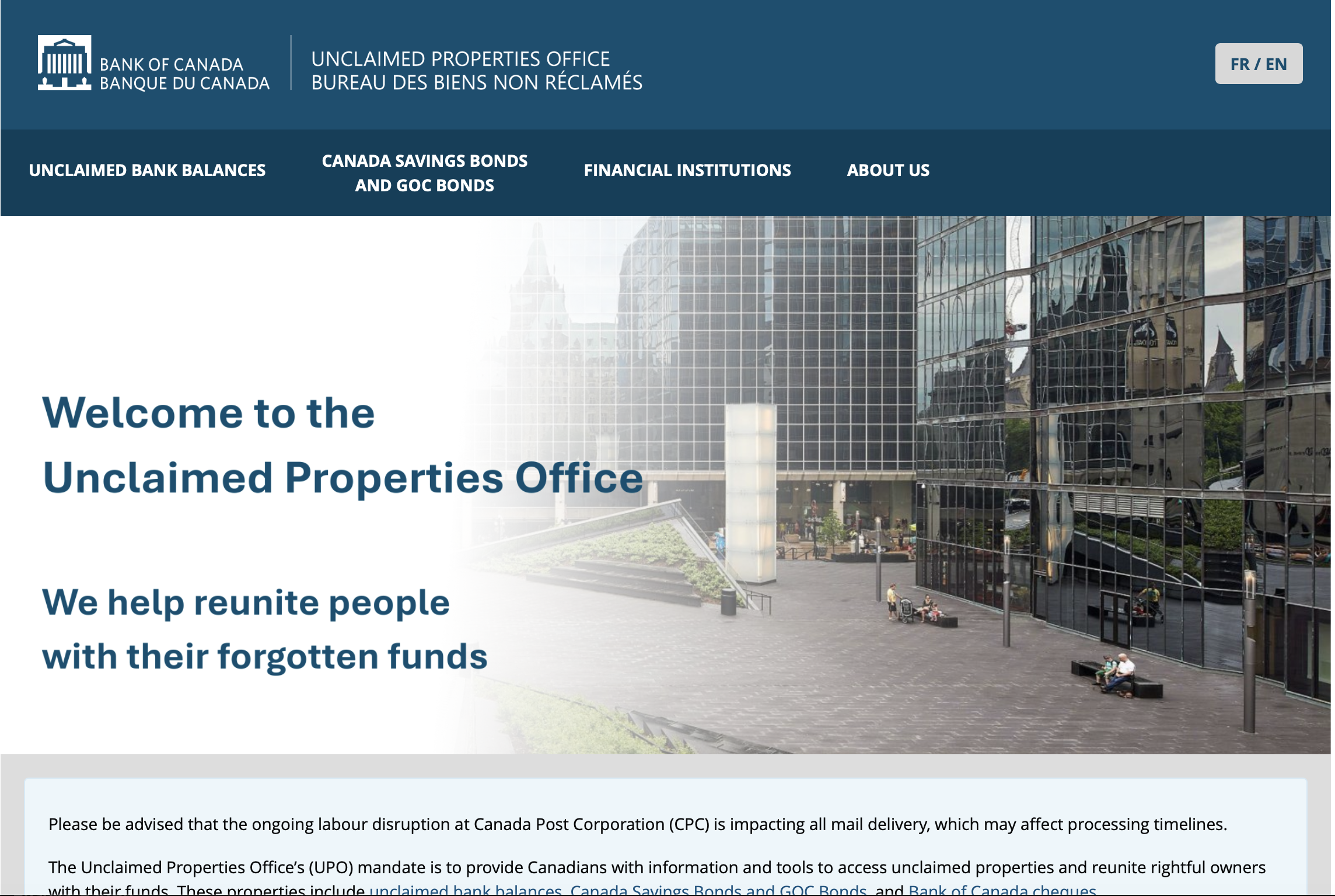
This is where money from federally regulated banks ends up after long periods of inactivity. Things like old chequing and savings accounts, GICs, certified cheques, and money orders.
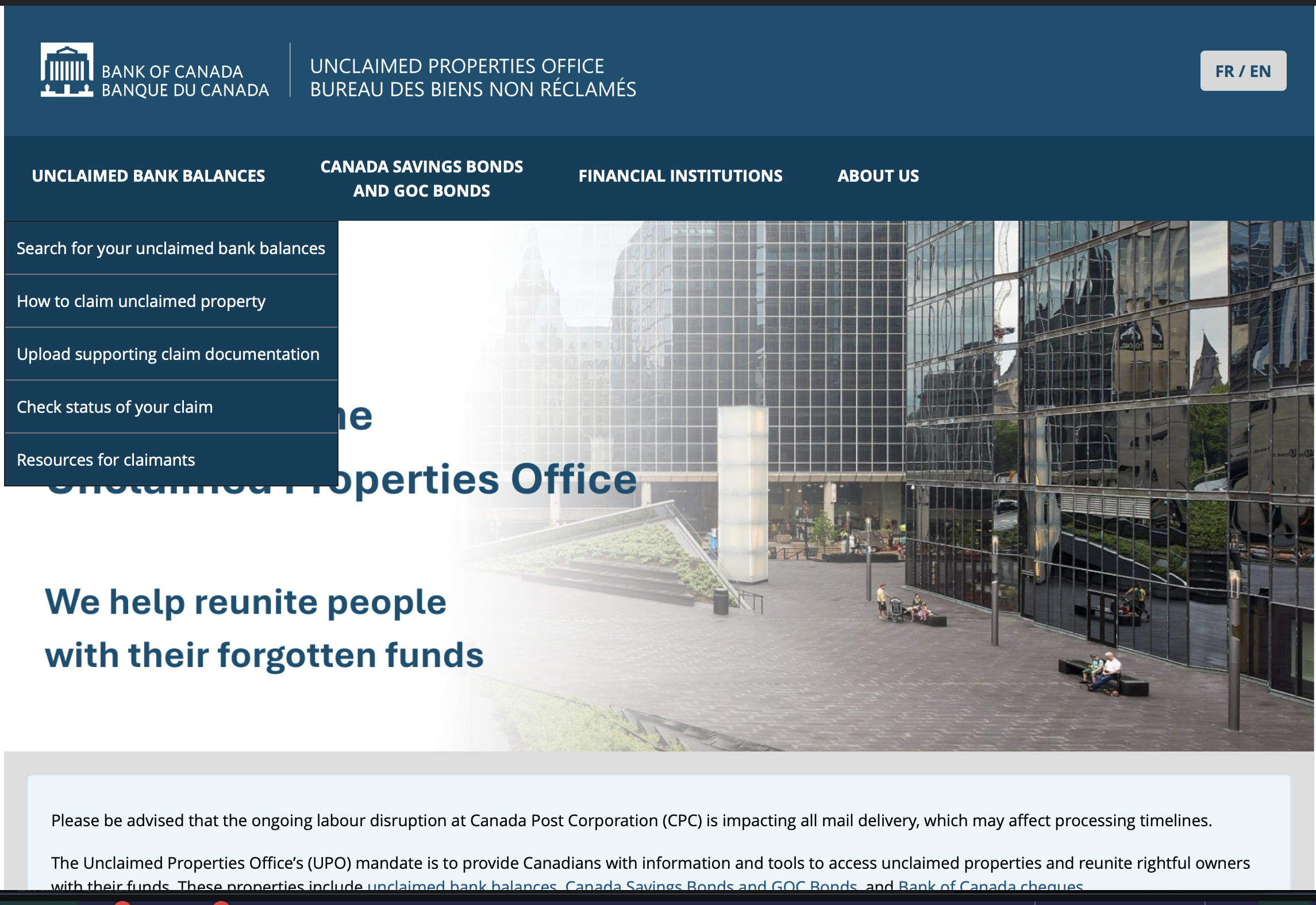
I searched my name.
Nothing came up.
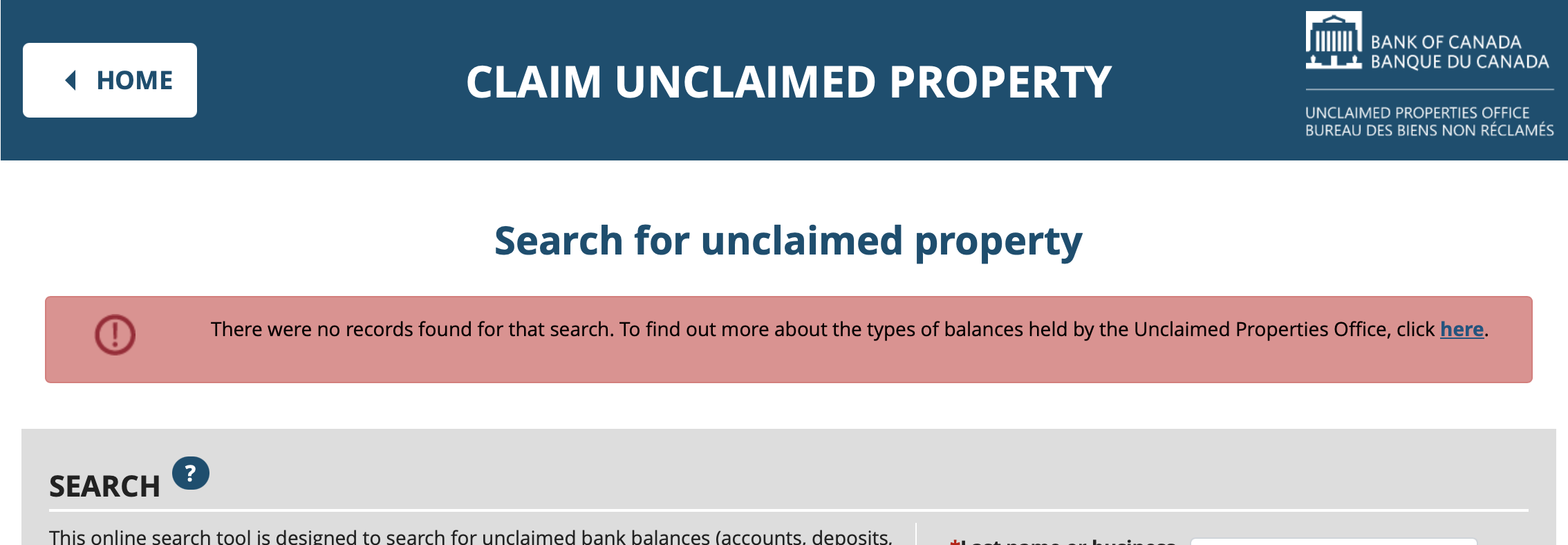
That was not disappointing. What surprised me was that I had never heard of this database before. If I had money sitting there, I would not have known to look. I took screenshots because I wanted to remember how simple the search looked and how little context it gave first-time users. Since I arrived in Canada in 2021, it was impossible for me to have a bank account abandoned for ten years or more.
What is considered unclaimed bank money?
As I read more closely, I learned that the Bank of Canada does not hold everything.
It does not hold RRSPs, TFSAs, life insurance policies, safety deposit boxes, stocks, or dividends. Those fall under different systems, often provincial.
What it does hold are balances transferred from federally regulated banks after ten years of inactivity, when the account holder cannot be contacted or does not respond.
The scale surprised me. As of the end of 2025, the Bank of Canada was holding about 1.6 billion dollars across roughly 3.6 million unclaimed balances. In that same year, about 20 million dollars was paid out through fewer than 2,000 claims.
The money exists. Almost no one ever comes back for it.
Trying MissingMoney
Next, I tried MissingMoney.com.
This site comes up often when people talk about unclaimed property. Canada is listed. All the provinces appear in the drop-down menu. At first glance, it looks easy.
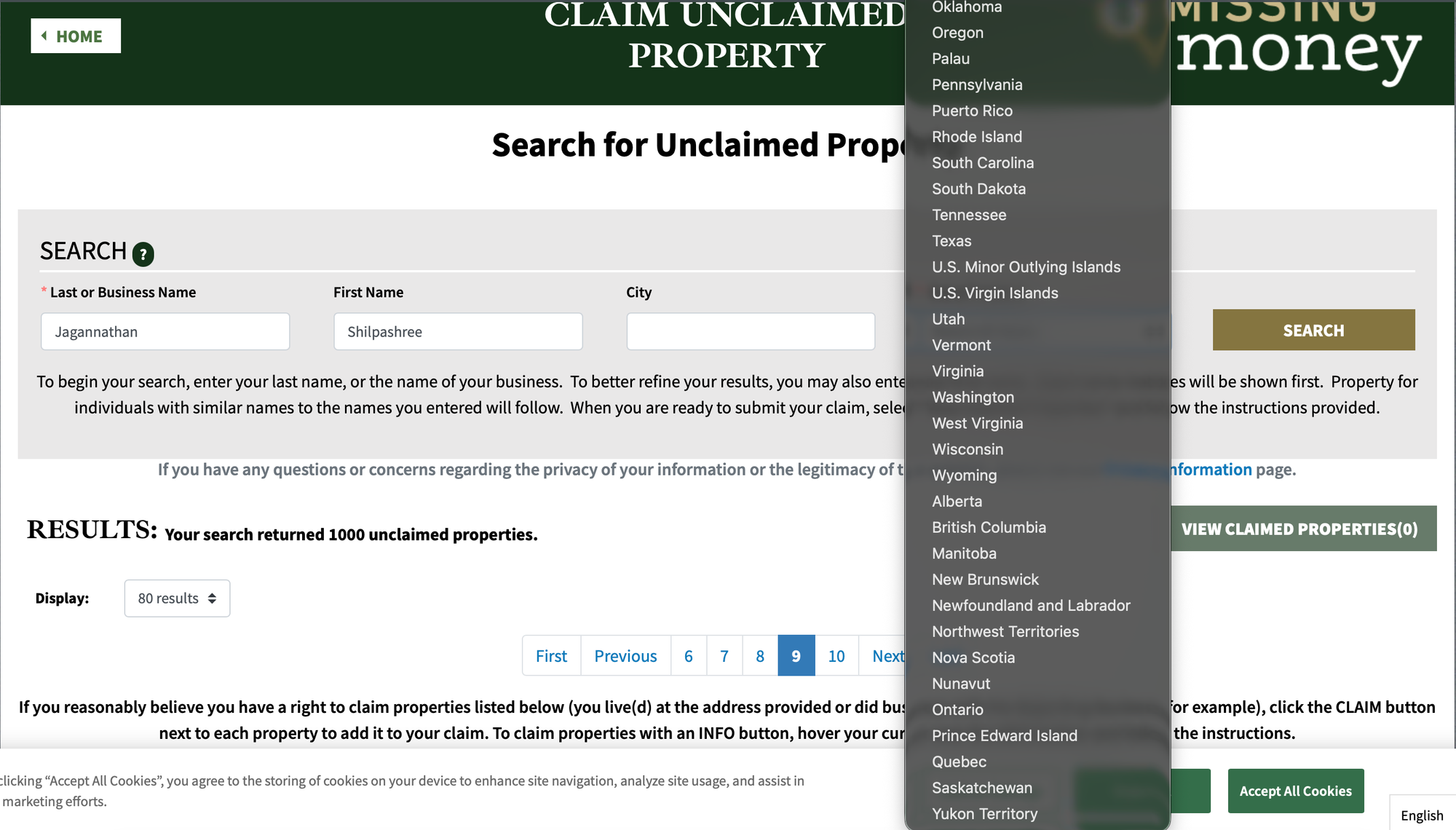
Then I searched my surname.
The results flooded the screen. Hundreds of entries. Almost all from the United States. I scrolled for a long time and could not find a single Canadian listing connected to my name.
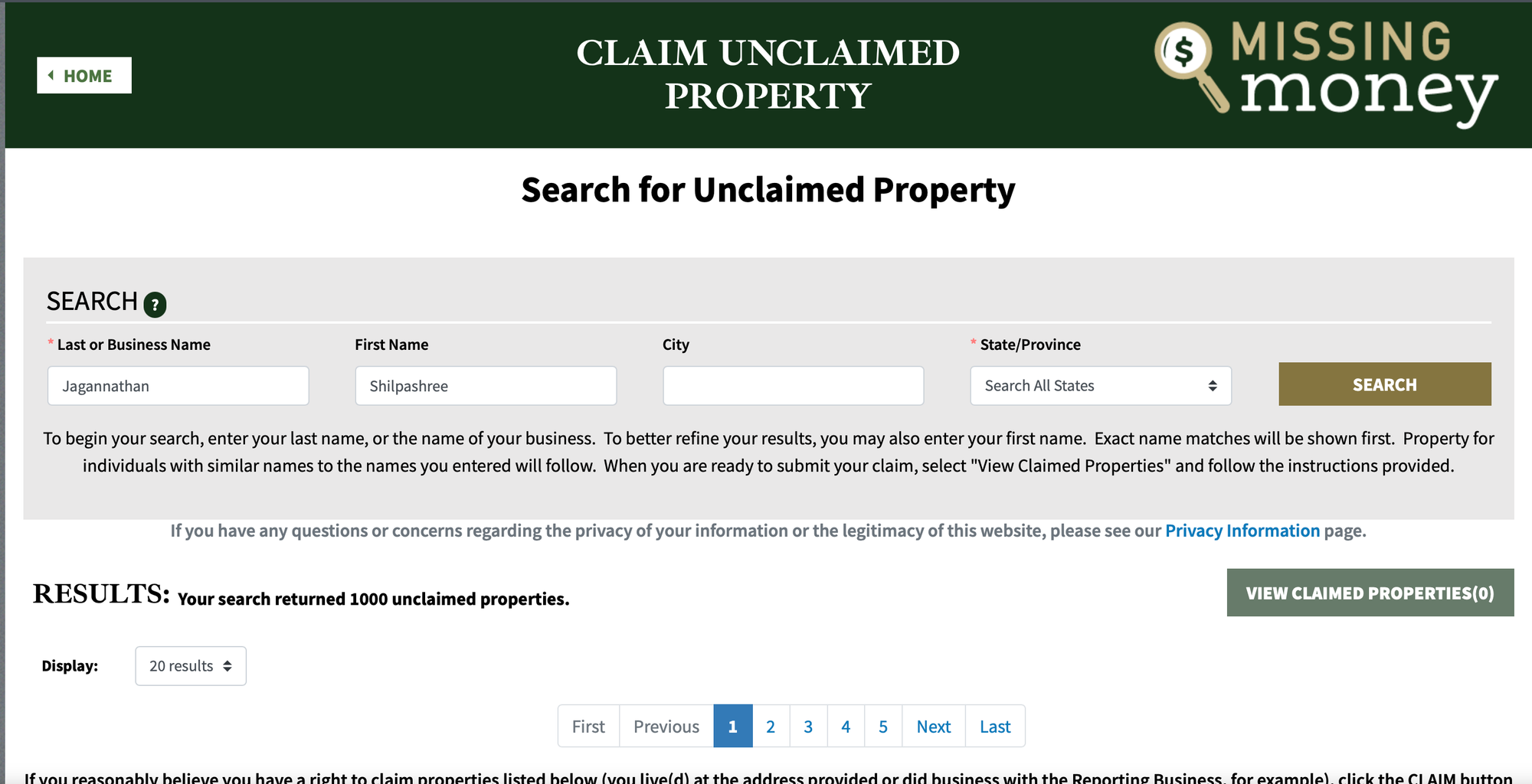
What surprised me most was how overwhelming it felt. I had always assumed my surname was uncommon in North America. On this site, it felt extremely common. Canada was technically included but practically invisible.
Why unclaimed money exists at all
I thought unclaimed money was rare before I did this. It isn't.
People don't claim money for fairly normal reasons. A cheque is sent to the wrong address. A small balance is left behind when an account is closed. There is no will when someone dies. Changes to paperwork don't always follow through.
Uncashed government checks, estates, court payments, credit union accounts, and tiny dividend payments can all sit there for years without being touched.
Looking beyond Ontario
I have only lived in Ontario. Ontario does not have a public unclaimed property registry.
Still, I searched for unclaimed money in my name across other provincial databases to understand how those systems actually work.
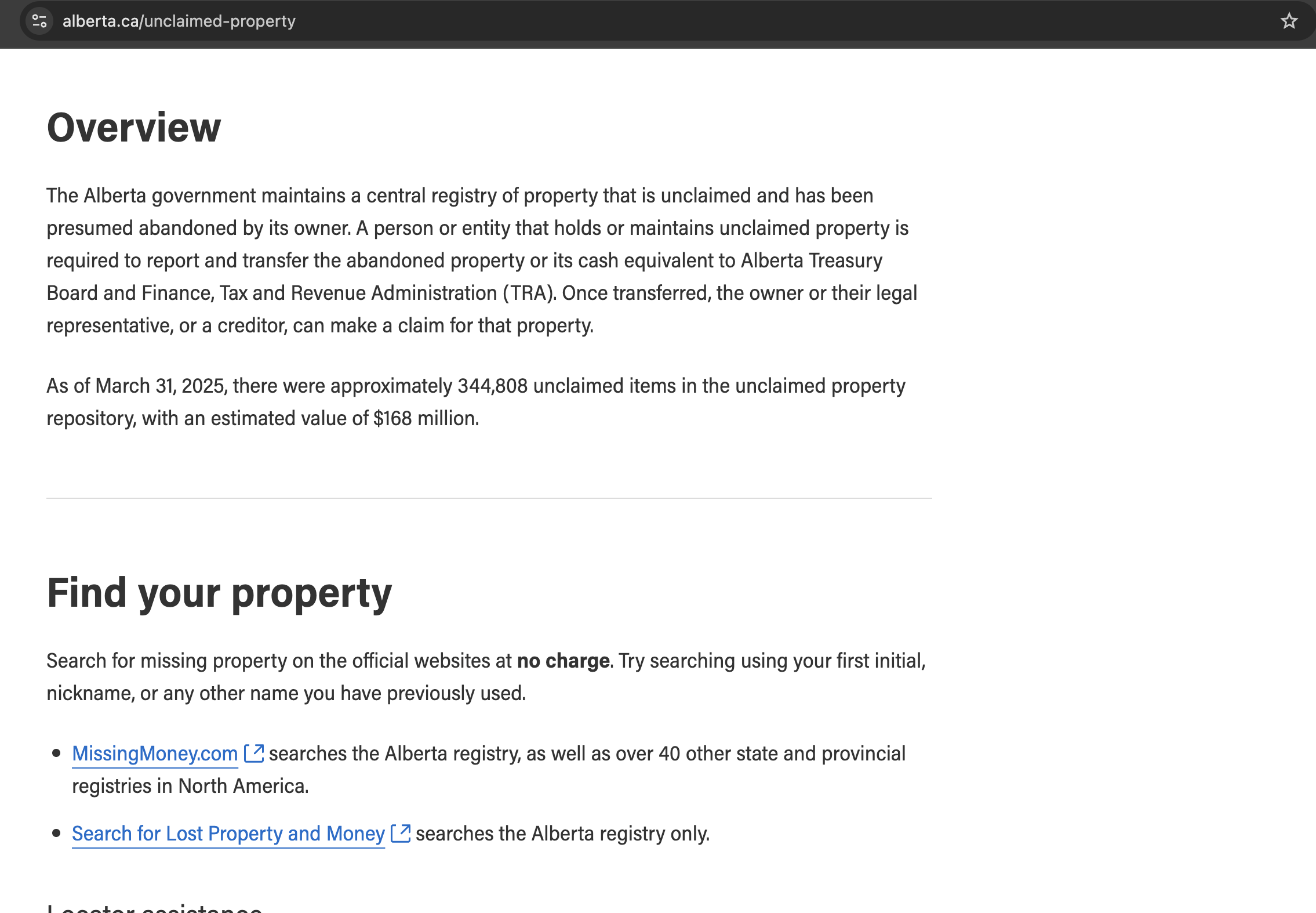
In Alberta, the provincial site redirected me back to MissingMoney. Alberta publishes that it holds hundreds of thousands of unclaimed items worth roughly 168 million dollars, and that claims can take up to 120 days. The system exists, but it requires patience and paperwork.
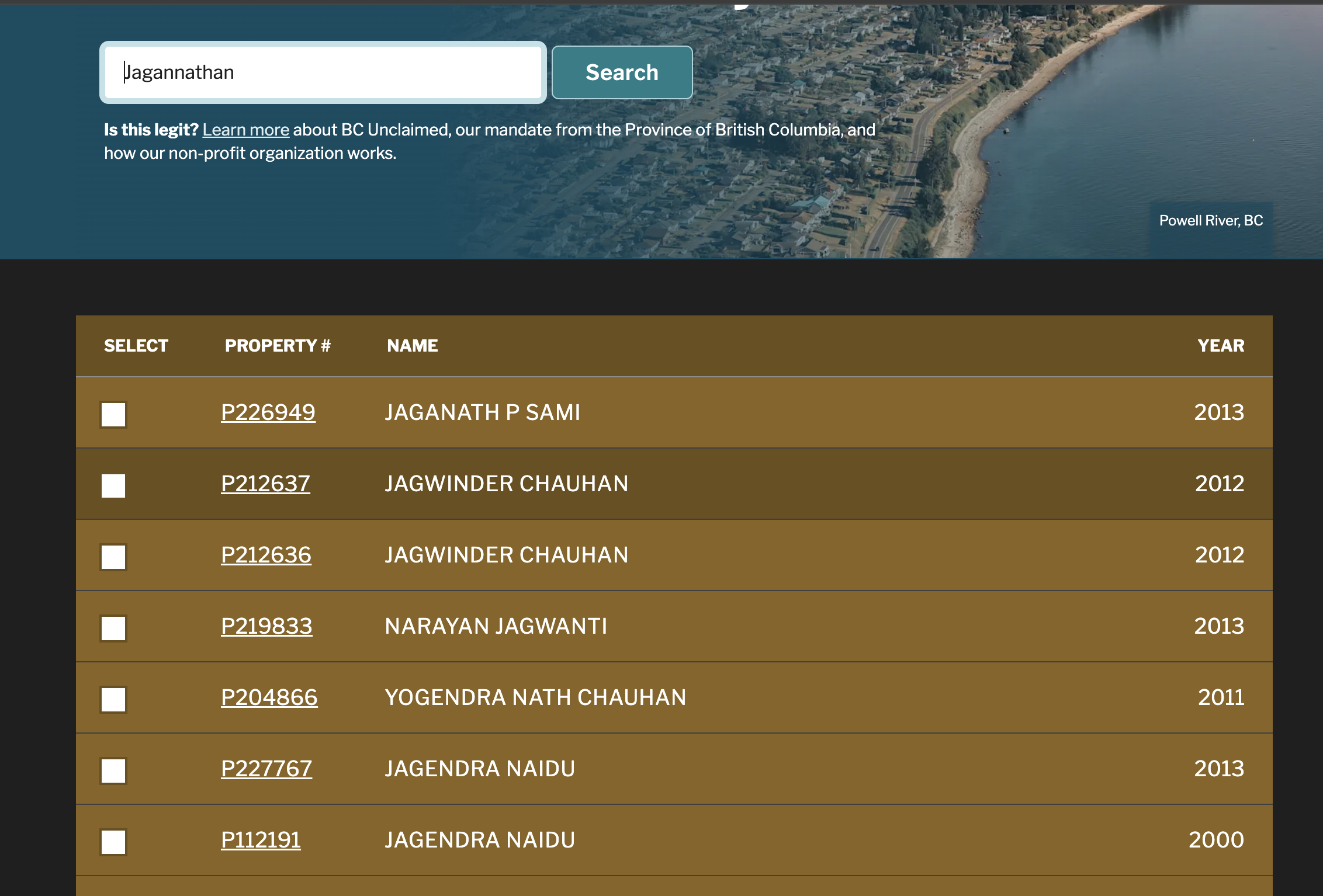
British Columbia was the clearest stop.
The site explains what kinds of money it holds and publishes how much is waiting to be claimed. When I searched my surname, I saw results, though none were mine. For the first time, I felt confident that I had actually checked properly.
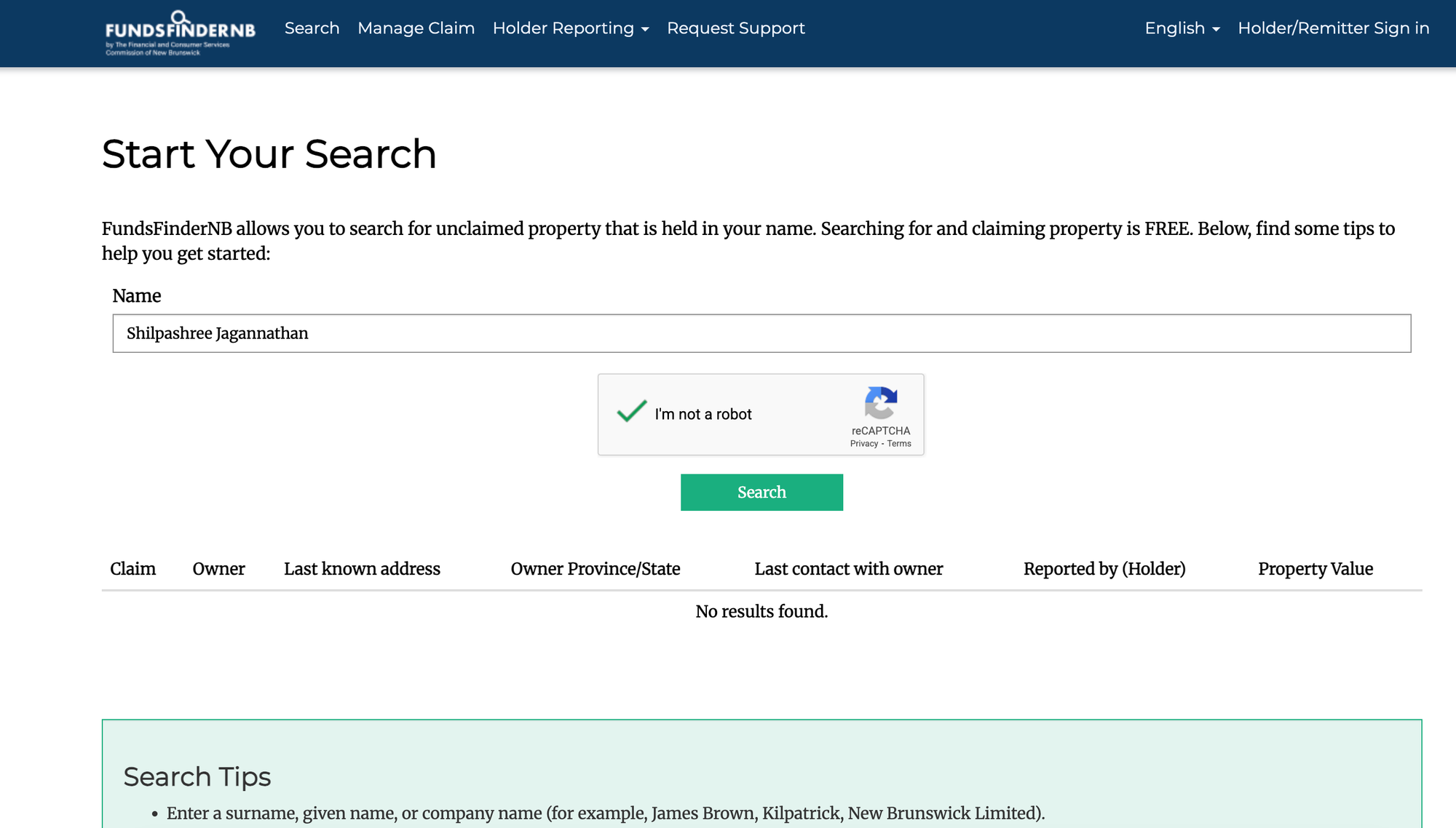
New Brunswick was the simplest.
My search returned nothing, but the site was straightforward and easy to understand.
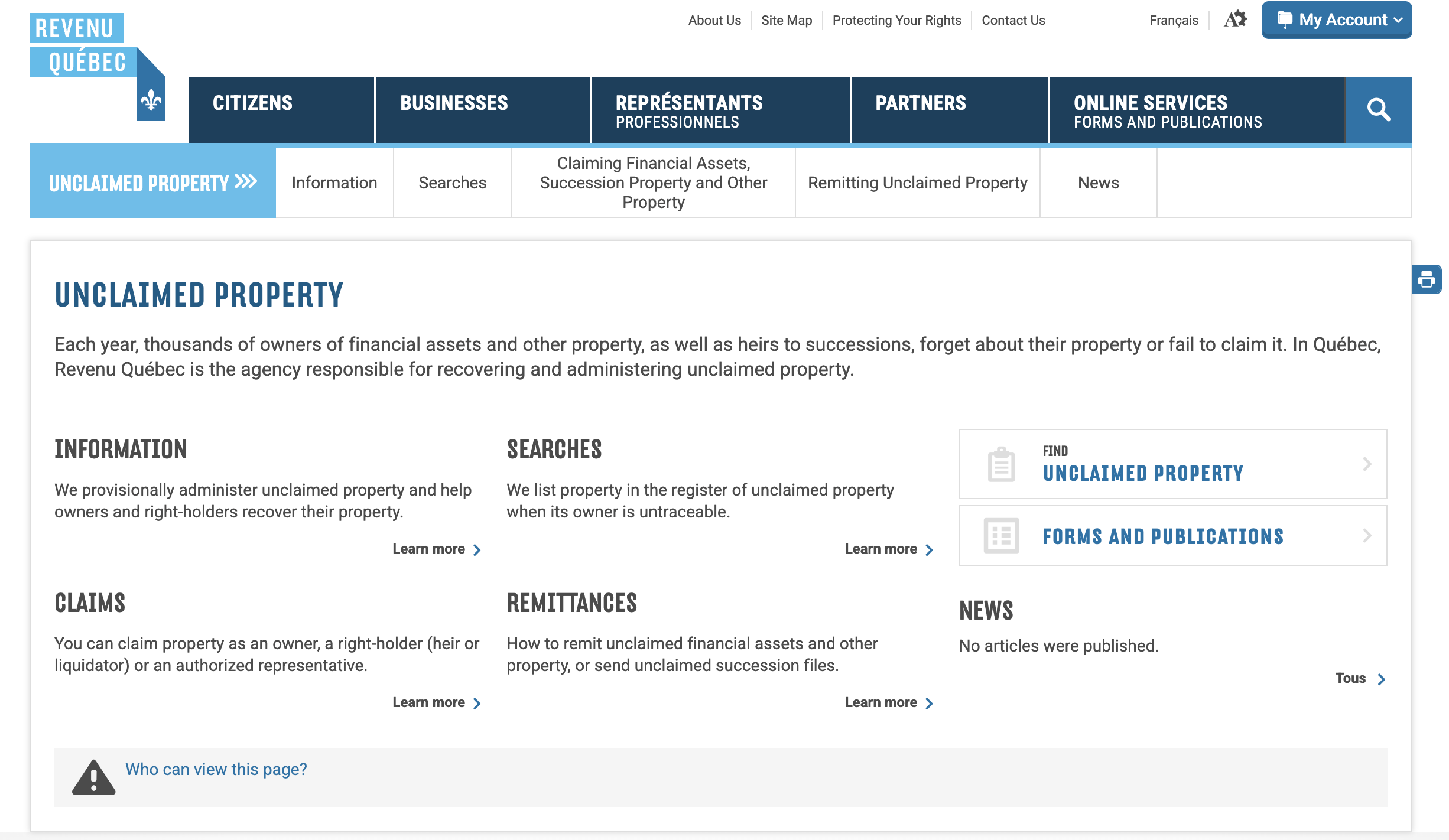
Quebec surprised me. The site opened in English. The search worked, though results appeared in a pop-up window, which meant enabling pop-ups in my browser. My name did not appear.
I do not live in these provinces. Depending on where someone lived years ago, their experience could be completely different.
Others did find money
After finishing my search, I asked people online whether they had ever actually found unclaimed money in Canada, and I posted the question in a Canadian tax and finance community on Reddit.
Some people responded publicly. Others reached out privately. All asked to remain anonymous.
One B.C. resident said they found about 2,800 dollars through British Columbia’s registry. The money was tied to their mother’s estate. She had passed away years earlier without a will. After submitting documents, including a long-form birth certificate, a cheque arrived in the mail.
Another reader said they found about 500 dollars in missed GST payments after clicking through their CRA account. They were not notified. They stumbled on it.
Someone else described finding old GST cheques the same way. They filled out forms and got paid.
Not every experience ended well. One person told me they found an unclaimed cheque but gave up after being asked to provide a copy of the original cheque. The amount was small, and the effort did not feel worth it.
I checked my CRA account too
After hearing these stories, I checked my own CRA account. There is a section that lists uncashed cheques.
Nothing showed up. By then, I wasn’t surprised.
What I learned
I found no unclaimed money in my name.
If you don’t go looking, you may never know what is sitting somewhere with your name on it. However, searching requires time, effort, and a readiness to navigate systems not intended for easy discovery.


