

“Here, now! Don’t fill up on the cheap stuff!” That’s what my grandpa would say whenever he treated us to a buffet dinner. Since I inherited his frugal gene, I wanted to know which fast food giant was actually giving me more energy for my money. So I hit up my nearest McDonald’s and Burger King locations, ordered their flagship meals, and calculated the cost per calorie. But I didn’t stop there. I also compared four other popular menu items. Here’s what I found.
My Spreadsheet Comparison: Cost Per Calorie
When I broke the menu items down to cost per calorie, Burger King consistently comes out ahead. Across flagship burgers, chicken sandwiches, nuggets, premium burgers, and fries, Burger King delivers more calories for each dollar spent than McDonald’s.
That doesn’t mean Burger King is always cheaper at the till. In many cases, it’s not. More calories aren’t inherently better from a health perspective. But from a pure value or survival standpoint, cost per calorie matters. A lower cost per calorie means you can satisfy hunger more cheaply, even if the sticker price is higher.
For flagship burgers specifically, the Big Mac costs roughly 1.2 cents per calorie. The Whopper comes in at roughly 1.1 cents per calorie. Burger King delivers more calories per dollar, making it more cost-efficient despite its higher upfront price.
The same pattern repeats throughout the spreadsheet. Burger King’s chicken sandwich, nuggets, and premium burger all provide more calories per dollar than McDonald’s counterparts. Even fries, which are a near-perfect comparison, still slant in Burger King’s favour.
I Tried Their Flagship Meals… For Research
To me, caloric value includes quality ingredients and how filling the food actually is. So I went to my nearest McDonald’s and Burger King to see what those calories looked like in real life.
I asked for printed nutrition pamphlets at both drive-throughs and was told neither restaurant provides them anymore. All nutritional information is available online or through their apps. I pulled the data from their websites to build my spreadsheet. McDonald’s was more transparent, with clear serving sizes and nutritional breakdowns. Burger King made me dig. It doesn’t list serving sizes upfront, so I had to track down and calculate the gram weights myself.
Both menu boards show total calories, but combo meals don’t break those calories down by item. If you want the full picture, you need a phone or a computer.
What I Ordered at Each Restaurant
Cost per calorie shows how cheaply you can buy energy, but it doesn’t measure the nutritional quality of that calorie. I included the weights to show whether the calories were coming from meat or from cheaper fillers, like bread and sauce. Calories from protein are more filling and provide more energy than “empty” calories, which helps explain both the price difference and why one meal satisfied hunger better than the other.
The Big Mac: Two Patties, Very Little Meat
Total Cost: $11.78
Total Calories: 920
Cost per Calorie: 1.3 cents
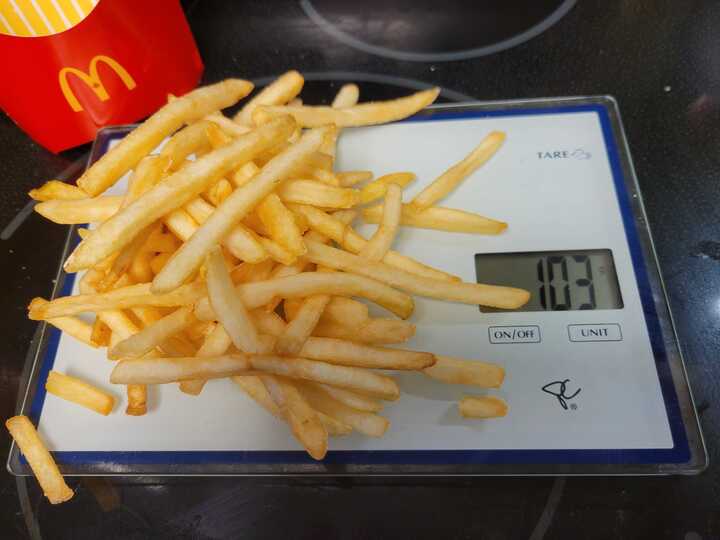
The Big Mac is famous for its two beef patties. Less famous is how insanely thin they are. Together, both patties weighed 68 grams. The total burger, with all the fixings, weighed 204 grams. And the medium fries weighed 103 grams.
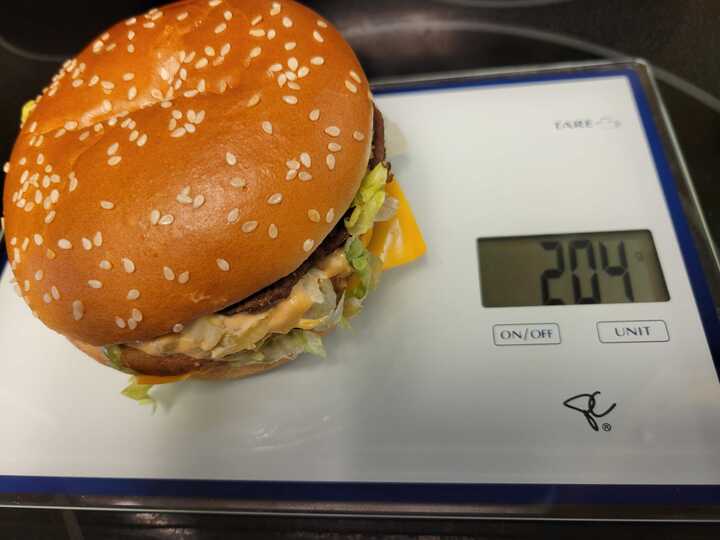
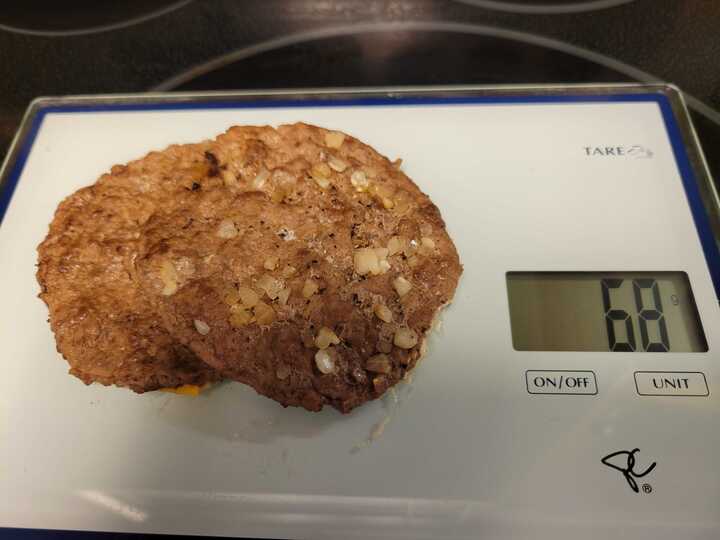
Burger toppings included cheese, shredded lettuce, a sprinkle of finely minced onions, and an obscene amount of special sauce. I scraped off the cheese and sauce to weigh the patties as accurately as possible. It was hella messy, but necessary. Leaving the cheese on would increase the weight of the patty.
According to McDonald’s nutritional information, the burger and fries together contain 920 calories. At a price point of $11.78 combined (pre-tax), the cost per calorie is $0.0128.
This was my first ever Big Mac, and it was super underwhelming. Despite the amount of sauce, the burger was dry. The extra middle bun soaked up moisture, and those two thin-ass little patties definitely weren’t helping. I felt like I was eating a loaf of bread with a side of meat as an afterthought. I was filling up on “the cheap stuff,” as my grandpa would say.
Unpopular opinion: It wasn’t filling, and the sauce is gross. I said what I said.
The Whopper: Bigger, Heavier, More Filling
Total Cost: $11.88
Total Calories: 1,010
Cost per Calorie: 1.2 cents
The flagship Whopper does not include cheese, whereas the Big Mac does. Remember, I scraped the cheese off the Big Mac patties to get a closer comparison since cheese adds calories and cost without increasing the amount of meat.
The single beef patty weighed 78 grams, which is more meat than the Big Mac’s two patties combined! The total Whopper burger weighed 249 grams with all the toppings. And the medium fries weighed 106 grams.
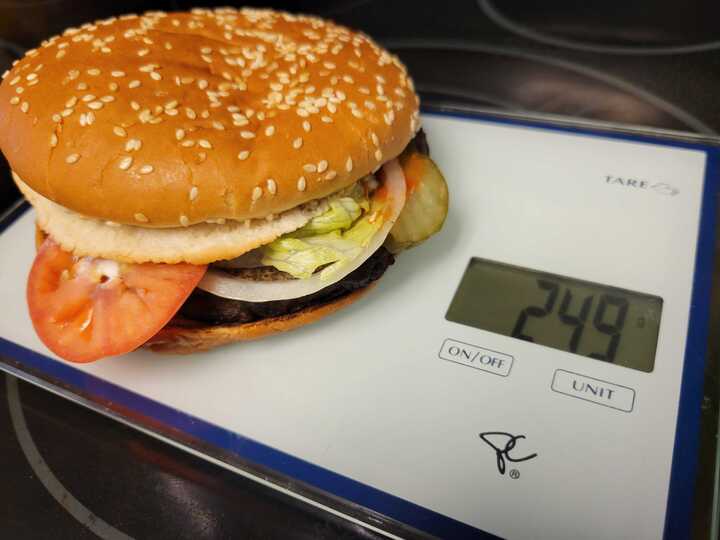
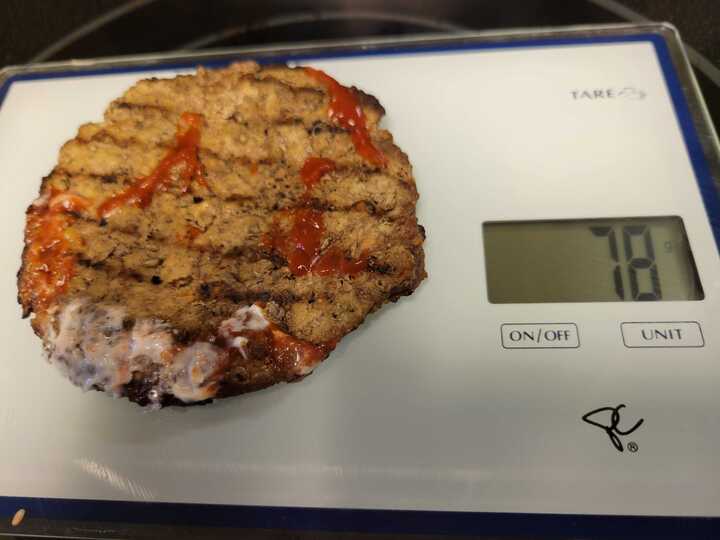
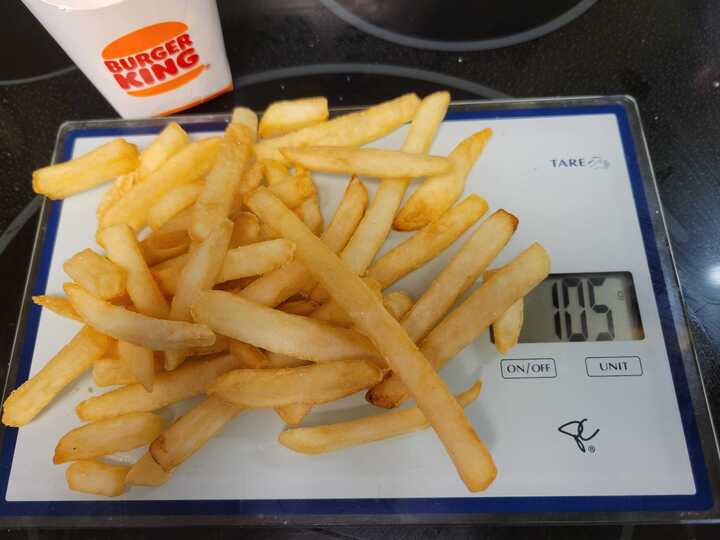
Burger fixings included tomato, onion, pickles, lettuce, ketchup, and mayo. The vegetables added volume and moisture without relying on the sauce alone.
According to Burger King’s nutritional information, the burger and fries together contain 1,010 calories. At a price point of $11.88 combined, the cost per calorie is $0.0118, which is nearly 8% cheaper than McDonald’s but with 15% more grams of food.
I was surprised to find how much I preferred the Whopper. I haven’t eaten Burger King in nearly three decades because of a bad experience I had as a kid. But the difference in serving size and quality was immediately obvious.
The Whopper was juicier, heavier, and noticeably more filling. The larger patty made it feel like a real meal, and the fresh vegetables added nutrition instead of just empty calories. And I obviously liked the flavour more because it wasn't smothered in a yucky sauce.
I preferred it by a wide margin. I might be a new BK convert. Their fries suck, though.
Why I Left Drinks Out of the Math
Combo meals look simple, but the drink complicates cost-per-calorie comparisons. I ordered combos because that’s what most people do, but beverages introduce too many variables. The same cup could be full of sugar, zero-calorie pop, or water, all with very different calorie outcomes.
The pricing makes it worse. McDonald’s adds a medium fountain drink to a Big Mac combo for just $0.11, even though that drink normally costs $3.79. Burger King charges an extra $1.01 for a medium drink that usually costs $2.99. Including combo prices without drink calories would distort the results and shift the focus away from food value. That’s why I compared burgers and fries à la carte, which was the only way to get a clean, honest comparison without letting sugar water mess with the math.
Where to Get More Food and ‘Better’ Calories For Your Money
When you strip away combo psychology and subsidized drinks, Burger King comes out ahead on cost per calorie. Across comparable items, it delivers more meat, more total food, and more energy per dollar than McDonald’s.
This is by no means a recommendation to eat fast food. Beans, rice, and vegetables are cheaper and healthier. But for the very specific question of McDonald’s versus Burger King, Burger King gives you more food and better quality calories for your money.


