

Which credit card you get after bankruptcy isn’t as important as when you get it. That’s the biggest lesson I learned after interviewing three people who went bankrupt and successfully rebuilt their credit. One guy was able to boost his credit score by 100 points within eight months of filing. While each person took a slightly different road to recovery, each started with a secured credit card.
Thomas used the Capital One Guaranteed Secured Mastercard with a $300 limit while still in active bankruptcy. T. Morrison opened a GIC-secured credit card through Meridian Credit Union immediately after discharge. And Robert Jenkins got the Capital One Guaranteed Secured Mastercard after discharge, but it took him several years to rebuild his score.
Here’s how they did it…
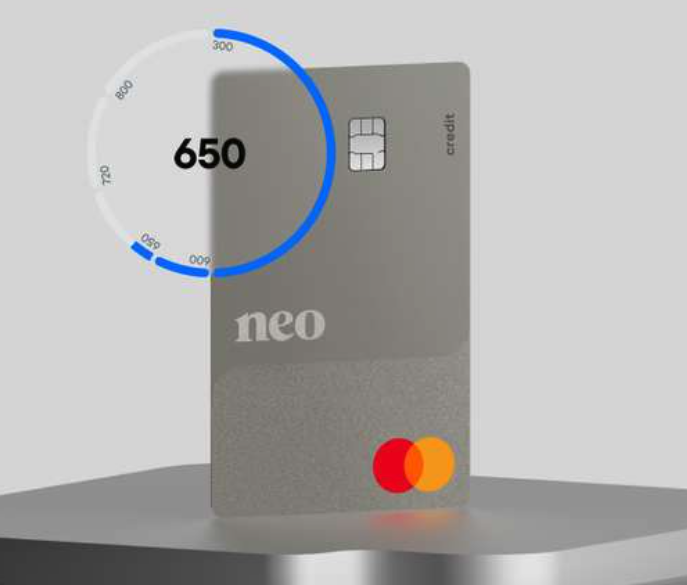
Get a $60 welcome bonus by signing up for any secured Neo Mastercard using the button below.
* Limited-time offer. Only valid for new Neo customers who open their first eligible Neo credit product and make a purchase within 90 days. Limit of one offer per customer. Offer is subject to the Neo Rewards Policy and may be amended or cancelled at any time without notice.
Thomas from Granby, Quebec
"My bankruptcy trustee told me this was the start of a new life." Thomas began rebuilding his credit almost immediately after filing for bankruptcy on June 9, 2025. For several years, he avoided doing his taxes, knowing he owed money on bonuses and extra income. Revenu Quebec began garnishing his wages to the tune of $1,100 per month.
The sudden and significant drop in his take-home pay made it impossible for him to keep up with rent and basic needs. So he met with a Licensed Insolvency Trustee (LIT) to explore his options. Because the tax debt was so large, bankruptcy was the only realistic choice.
“She also said that if I want to rebuild my credit, do it right after declaring bankruptcy,” he said. “So I took her advice.” Three months after filing, Thomas applied for the Capital One Guaranteed Secured Mastercard with a $300 limit and $75 security deposit. He keeps his credit utilization low and pays the balance off in full every two weeks. I said he uses the card for bills he has to pay every month anyway, like his phone, internet, and Amazon Prime subscription.
He was also able to finance a $12,000 used car with a $3,500 down payment. The loan is on a 4.5-year term with a 13.99% interest rate. While the terms aren’t great, Thomas says the payment history is just as effective at rebuilding his score as the credit card.
Upon filing for bankruptcy, Thomas’ credit score dropped to 400. Eight months later, it has already climbed back up to 500. He believes the credit card and car loan together are responsible for the 100-point rebound, and expects it to keep going up as his positive payment history grows.
Because he is currently in active bankruptcy, it won’t drop off his credit report until about 7 years after he is discharged.
T. Morrison from Guelph, Ontario
“Within the first month, I saw movement,” he explained. “And then every month it kept going up.” In 2019, T. Morrison had no choice but to file for bankruptcy when his wife fell victim to identity fraud. This only compounded the other financial complications the couple had been experiencing.
Because they had several joint debts, Morrison would have become solely responsible for them if his wife had filed on her own. It would have left the household stuck under the same financial pressure, so it only made sense to file together.
The bankruptcy lasted two years, and he was told he could not apply for any new credit until he was discharged. Immediately upon discharge, Morrison got a GIC-secured credit card from Meridian Credit Union. Meridian required them to put $600 into a Guaranteed Investment Certificate (GIC) that was locked in for 5 years. That investment was then used to secure the credit card with a $500 limit. The Meridian secure card is only available to Meridian members in Ontario and is issued on a case-by-case basis.
Morrison says he only uses the card for his YouTube Premium subscription and the occasional downtown parking fee. “I was able to increase my credit score from 588 after discharge to roughly 720 within 2 years,” he explained. He says other than the secured credit card, he doesn’t use credit anymore. Instead, he sticks to a strict budget and saves aggressively. “Everything we bought, we've been able to pay for with cash.”
As soon as he receives his credit card statement, he pays the balance in full. He also refuses to increase the limit when offered. “If you can’t pay it off in one paycheque,” says Morrison, “it’s too much.”
The bankruptcy still appears on his credit file, but should drop off in 2028, which is seven years from his expected discharge date.
Robert Jenkins from Nanaimo, British Columbia
“I consolidated all my debt onto this loan, but then didn’t cancel the credit cards,” he explains. “So I just ran the cards up again. I did everything wrong.” When Robert Jenkins filed for bankruptcy in 2009, he owed nearly $50,000, including three maxed-out credit cards, a truck loan, and a high-interest consolidation loan.
The bankruptcy lasted nine months. After discharge, his credit score was hovering between 390 and 400. The first thing he did was get a Capital One Guaranteed Mastercard. “It had a small $75 fee to secure the card and the credit limit was pretty low, like two or three thousand dollars.”
But he didn’t change his behaviour, eventually maxing out the card and turning to payday loans. Robert admits he didn’t fully understand personal finance until much later, when he began studying accounting as part of his business degree. That education taught him how credit utilization, interest rates, and budgeting all affect financial stability.
He eventually consolidated the credit card and payday loans into a lower-interest installment loan and aggressively paid it down. “It was a 5-year loan, and I paid it off in two and a half years.” Robert also started tracking every dollar using the popular budgeting app YNAB (You Need A Budget), and doing monthly budget reconciliations to help him stay on track.
After the consolidation, his credit profile improved dramatically, and he started qualifying for credit limit increases. He always accepted what was offered, “But I never spent any of that credit,” he explained. “My credit utilization ratio dropped, and that’s what boosted my score from the mid-700’s to 830.”
Not only does he have stellar credit, but the bankruptcy no longer appears on his credit report. Looking back, Robert says bankruptcy gave him the reset he needed to rebuild his life. “If I never declared bankruptcy, I never would have qualified for student loans or gone back to school.”
Surprising Advice From a Licensed Insolvency Trustee (LIT)
Scott Terrio is an LIT and the consumer insolvency manager at Hoyes Michalos in Toronto, Canada. He says the biggest mistake people make after filing for bankruptcy is taking too long to start rebuilding their credit. “You don’t have to wait until discharge,” he says. “You can get a secure card immediately after filing.”
A secured credit card requires a cash deposit as collateral. And the amount of the deposit usually becomes the card’s credit limit. Secured cards are designed for high-risk borrowers who don’t qualify for traditional cards. They report to the credit bureaus just like a regular credit card, and each on-time payment helps build a positive credit history.
Terrio says that, yes, people are technically prohibited from obtaining new credit during an active bankruptcy. But in reality, “There’s no system to stop you,” he explains. “There’s no bankruptcy police. The only barrier is whether a lender checks your credit report and decides not to approve you.”
Credit scores recover slowly because positive payment history accumulates month by month. You need as many months of positive reporting as possible. For that reason, Terrio recommends getting a secured credit card after filing, putting one small recurring bill on it (like your phone or streaming subscription), and paying the balance in full every month. Over time, those small monthly payments start to counteract the negative marks in your credit file.
If you want to follow this strategy, here are some of the most commonly available secured credit cards in Canada.
How to Rebuild Credit After Bankruptcy
Thomas, T. Morrison, and Robert all travelled very different paths to bankruptcy. But each took a strikingly similar road to recovery. Each started rebuilding their credit with a secured credit card, used it for regular recurring expenses, and paid the balance in full and on time every month.
Notice how none of them needed complicated credit ‘hacks’ or an expensive credit repair service? That’s because there is no cheat code. Slow and steady wins the race.
Get a secured card immediately after filing, don’t wait until discharge. Use it to pay for things you need anyway, like recurring bills or subscriptions, then pay it off every month. And, most importantly, heal your relationship with money. Commit to improving your financial literacy and establishing healthy financial habits.


